Commercial Diving for Water & Wastewater Facilities
Reviewed by Joseph Templeton, President, Zion Marine · Last reviewed October 2026
Potable and wastewater environments, operational constraints and documentation.
Why plants use divers at all
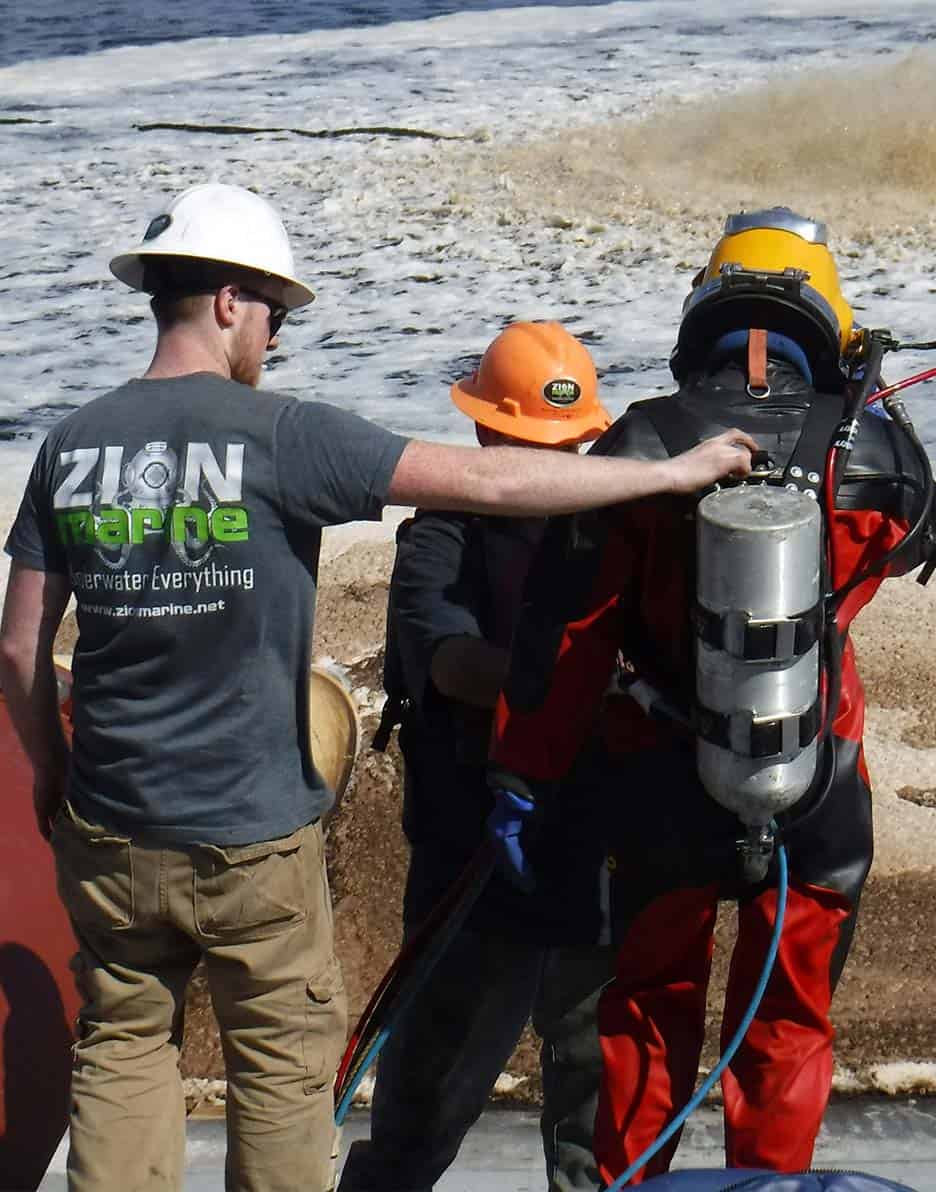
Water and wastewater facilities are full of components that cannot be reached without draining: clearwells, reservoirs, wet wells, basins, intakes, outfalls and gates. Draining them is expensive, sometimes impossible, and occasionally unsafe. Commercial diving is how those components are inspected, maintained and repaired while the facility keeps operating.
Potable water environments
Diving in potable water systems involves dedicated procedures and equipment preparation to protect water quality: equipment cleaned and prepared for potable water entry, coordination with facility staff on system protection, and documentation of the operation. The goal is simple, the facility's water must be protected before, during and after the dive.
Wastewater environments
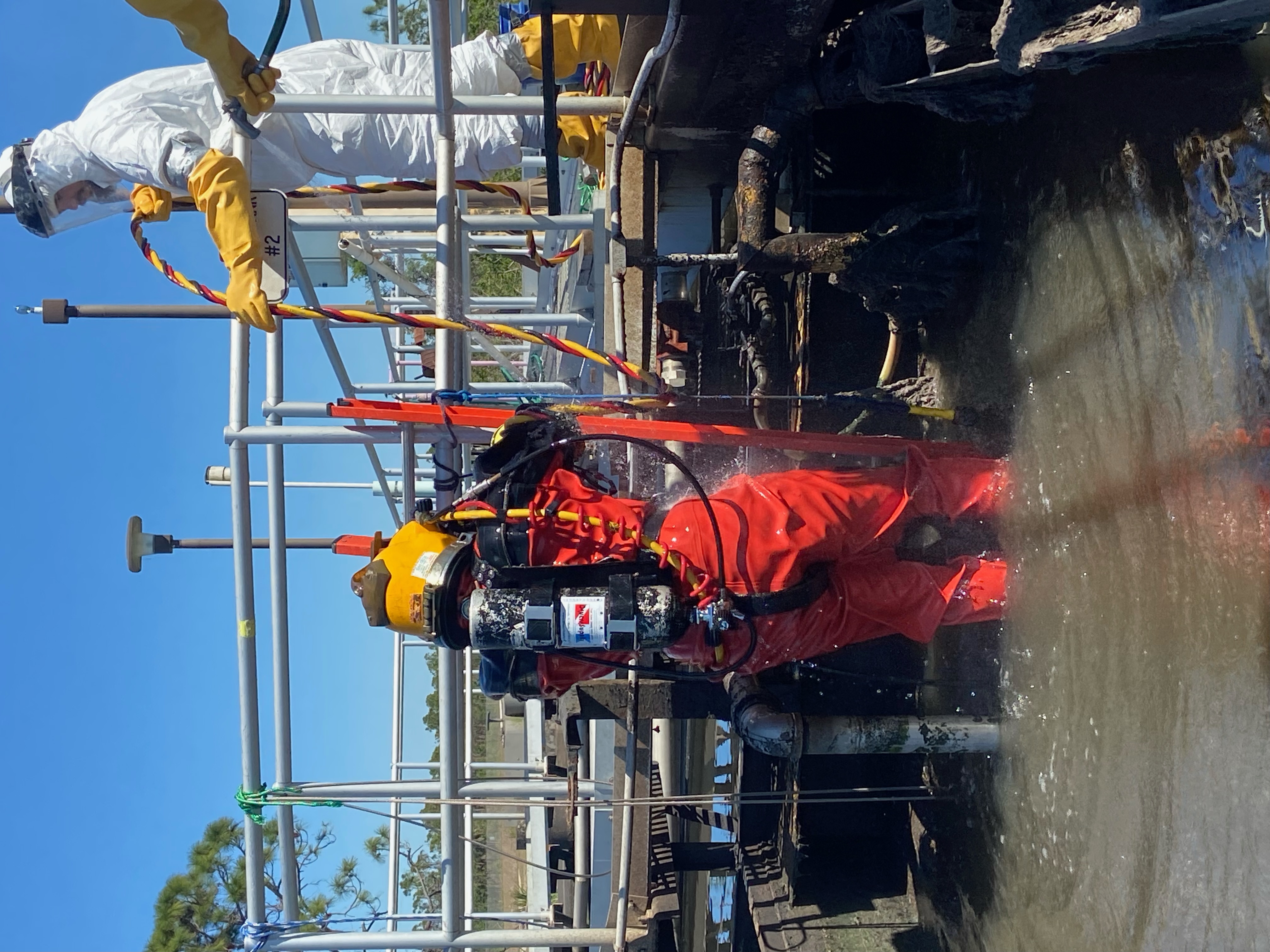
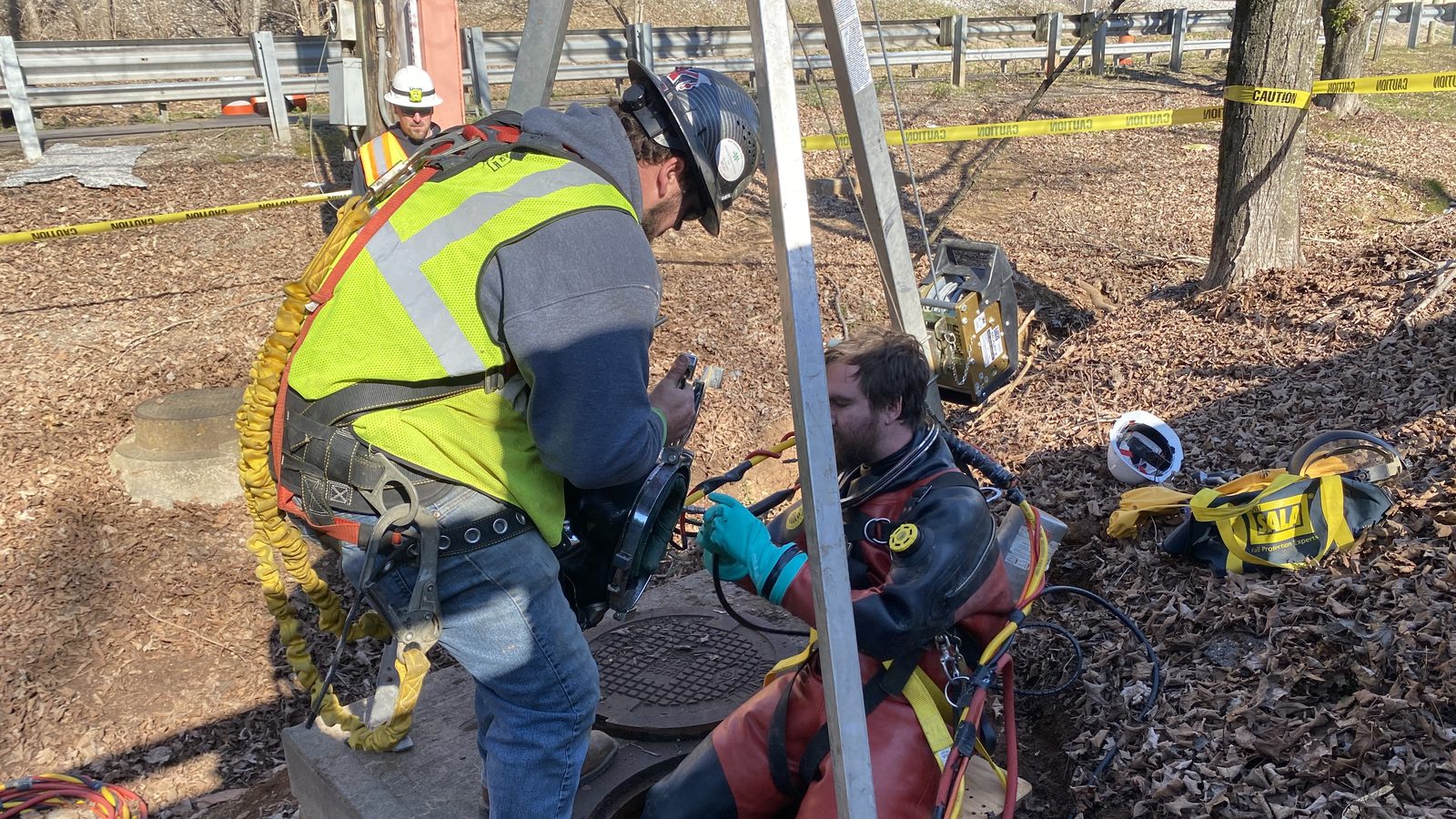
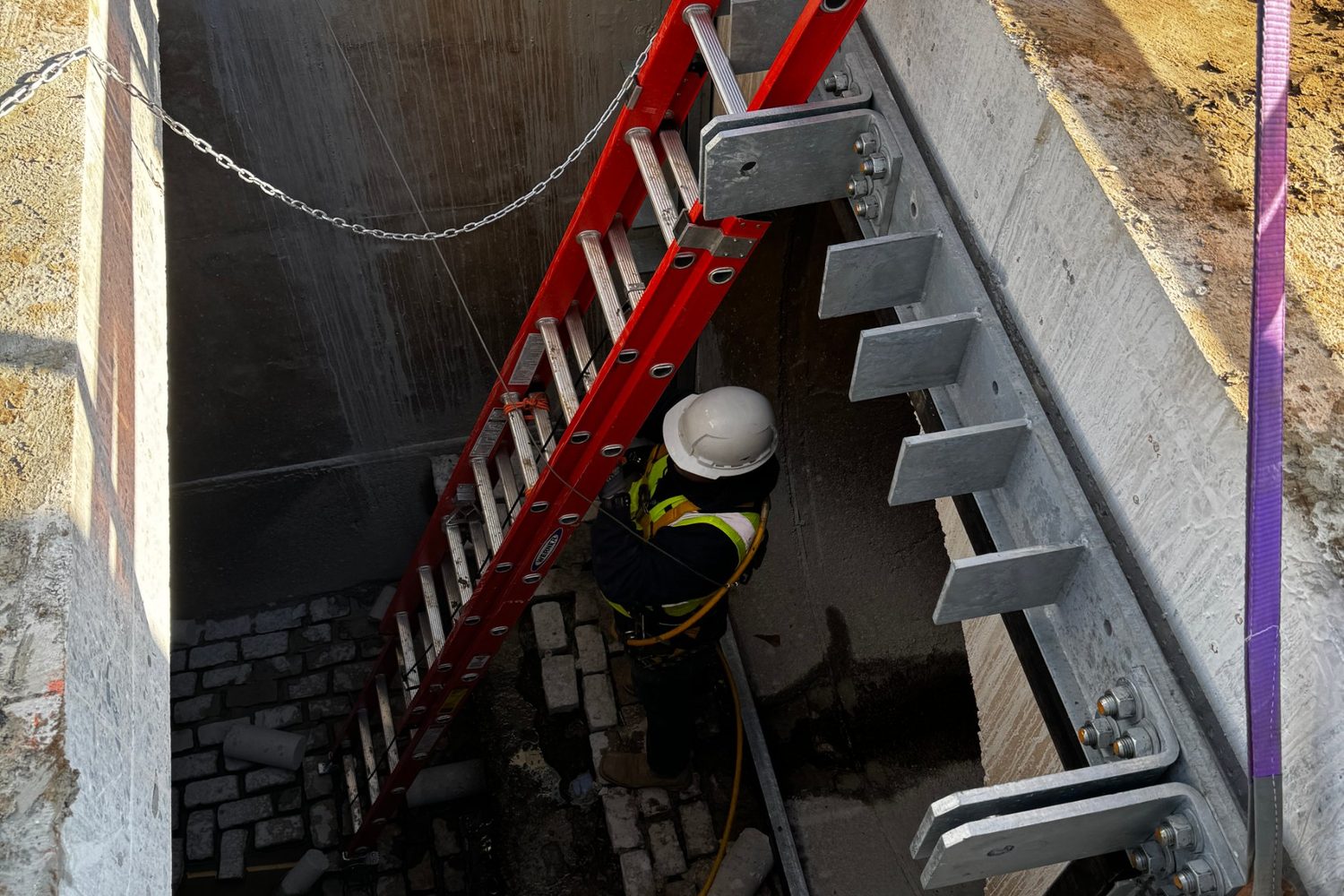
Wastewater structures add contamination hazards, zero visibility and confined access. Operations in these environments use project-specific planning, protective equipment and decontamination procedures based on the conditions present. Facility knowledge, what is upstream, what can be isolated, is central to the plan.
Common facility dive work
Most facility dive work falls into a recognizable set of categories. Scoping by category, inspection, cleaning, repair, sediment removal, makes estimating and scheduling straightforward.
- Clearwell and reservoir condition inspection
- Wet well and basin inspection and cleaning
- Intake and screen inspection, cleaning and repair
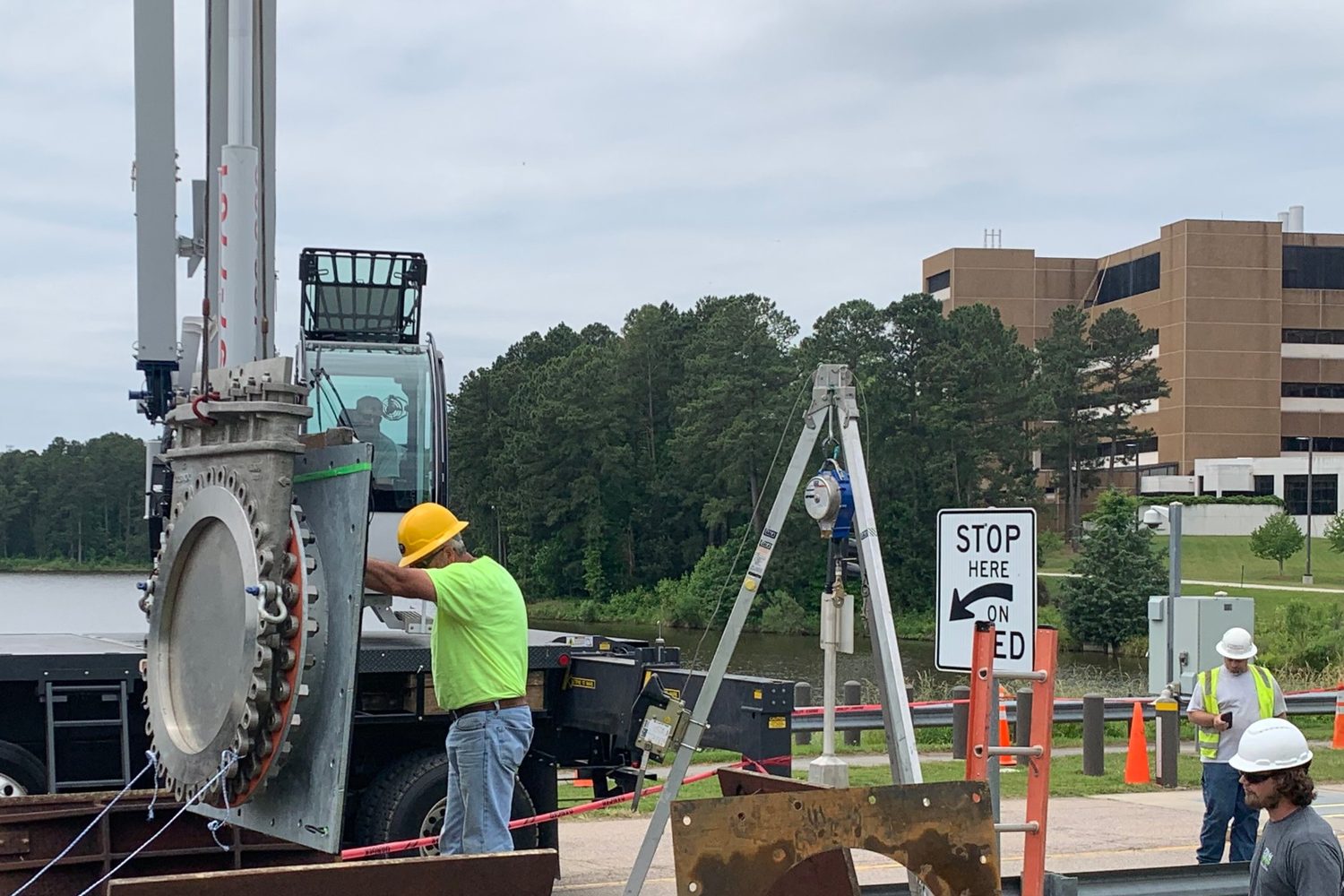
- Gate, valve and guide inspection
- Debris removal and minor repairs
- Sediment removal in basins and forebays
Documentation for plant records
Facility dive work is usually documented for the plant's records: video and photography of conditions, measurements, and a report organized by structure. Over successive inspection cycles, this documentation becomes a condition history that supports budgeting and regulatory reporting.