Contaminated-Water Diving: What's Actually Required
Reviewed by Joseph Templeton, President, Zion Marine · Last reviewed October 2026
Equipment, planning and protocol differences for wastewater and process-water diving.
Wastewater diving is a different discipline
Diving in wastewater, stormwater and industrial process water is not the same job as diving in clean water. The water may contain biological hazards, chemicals, debris and zero visibility. The dive plan, equipment and surface procedures all change accordingly.
Owners should expect a contractor to ask detailed questions about the water environment before quoting. That questioning is a sign of competence, not inexperience.
What changes on a contaminated-water project
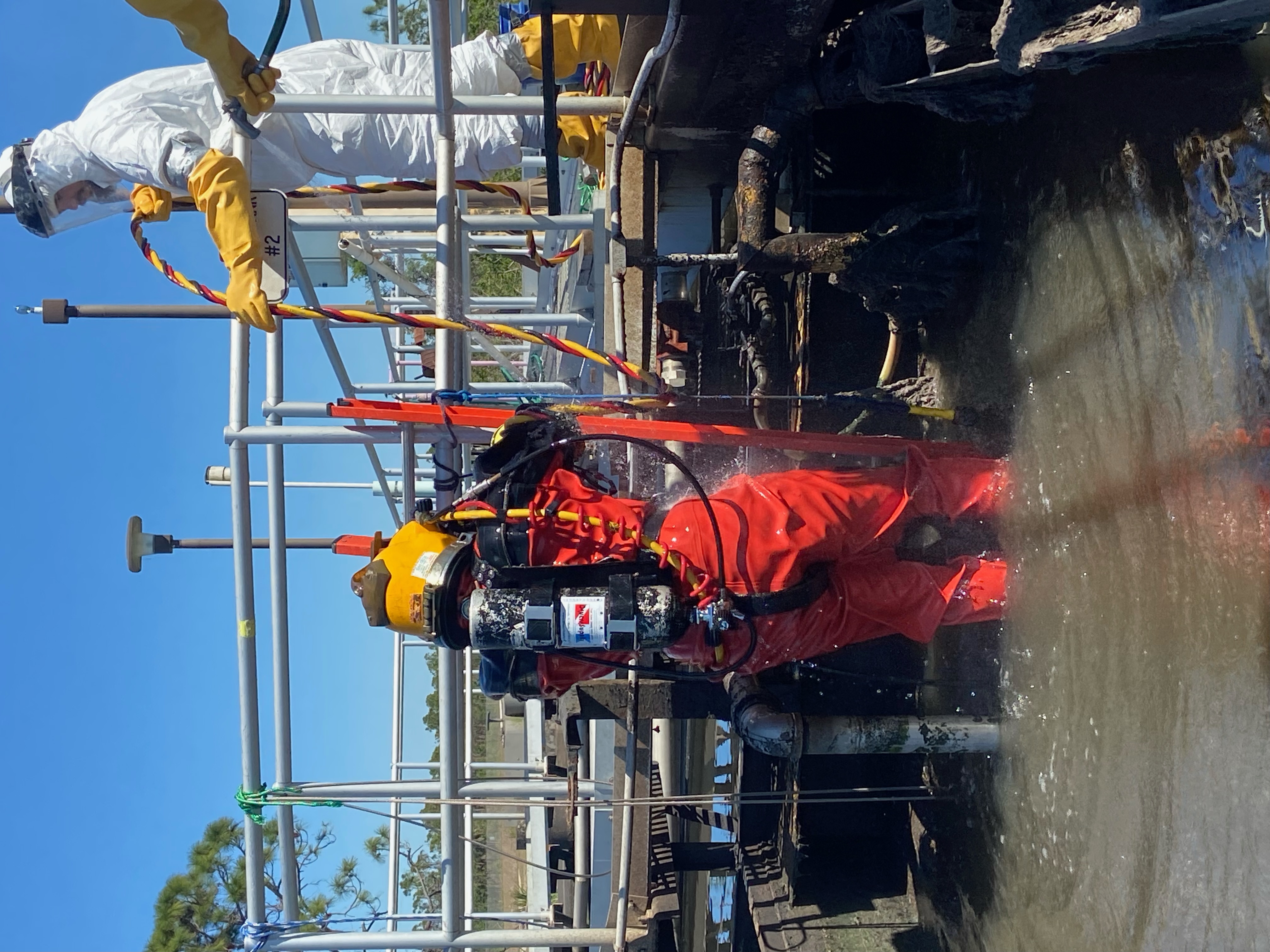
Depending on the environment and project conditions, contaminated-water operations may involve diving equipment, surface-supplied systems, personnel protective equipment at the surface, decontamination stations for diver and equipment, and revised emergency procedures.
- Dive plan specific to the water environment and hazards present
- Isolation and exclusion procedures agreed with facility staff
- Decontamination procedures for divers and equipment after operations
- Surface support staged with appropriate protective equipment
- Documentation of water conditions and hazard controls
Visibility and verification
Many contaminated-water environments have zero visibility. Inspection in these conditions relies on tactile inspection, measurement, and careful location referencing rather than video alone. Owners should understand what documentation is realistic in low- or zero-visibility water and how the report will convey findings.
Coordination with the facility
Facility staff play a central role: identifying flows that can be isolated, confirming what is upstream, and providing information about the process. The safest contaminated-water projects are ones where the operator and the dive team plan together before anyone enters the water.