
Get to the components no one else can reach.
Penetration diving in dark conduits, siphons, pipelines and limited-clearance structures, the confined and difficult-access work that keeps infrastructure owners from draining, demolishing or guessing.
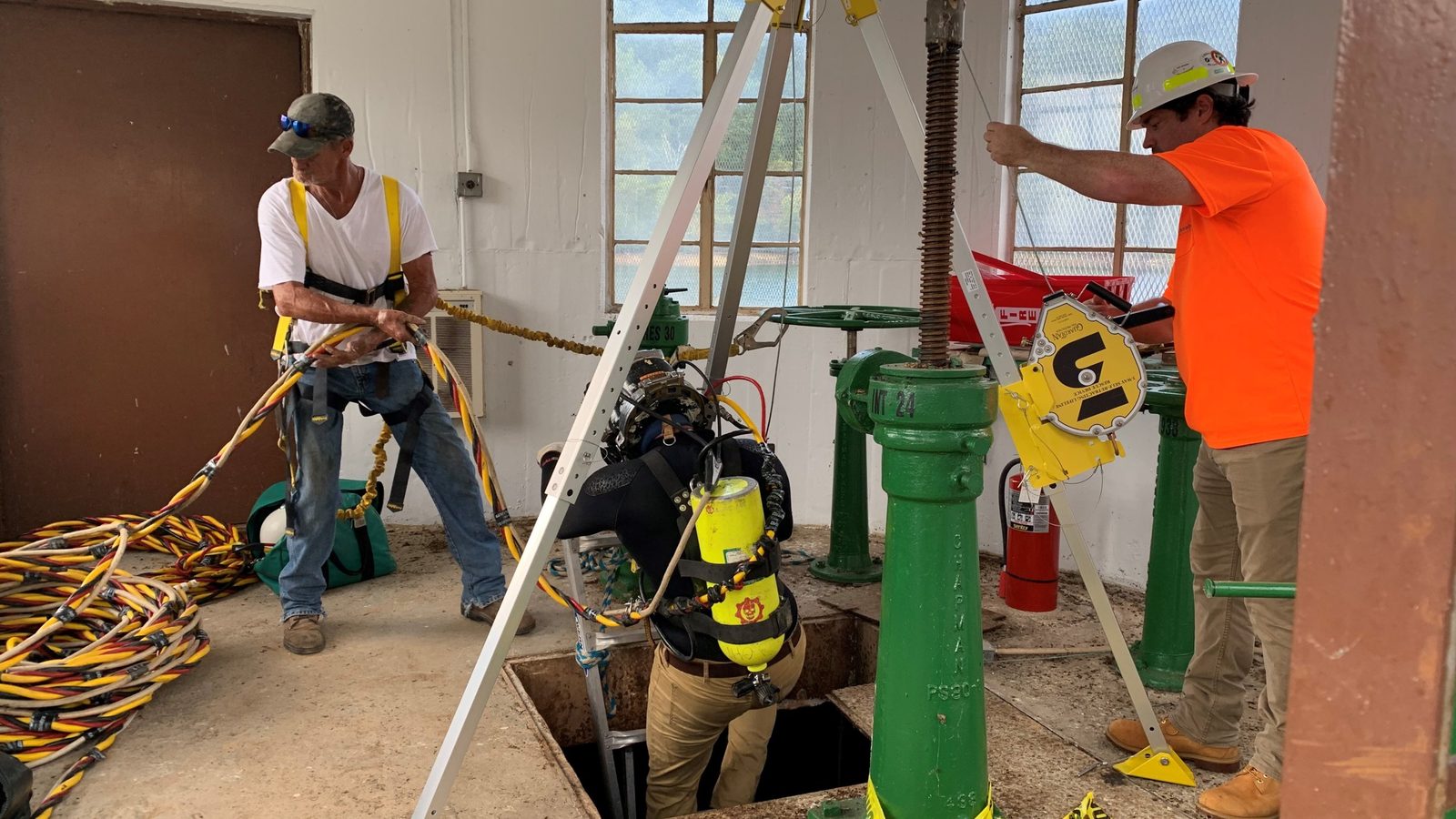
When there is no other way in.
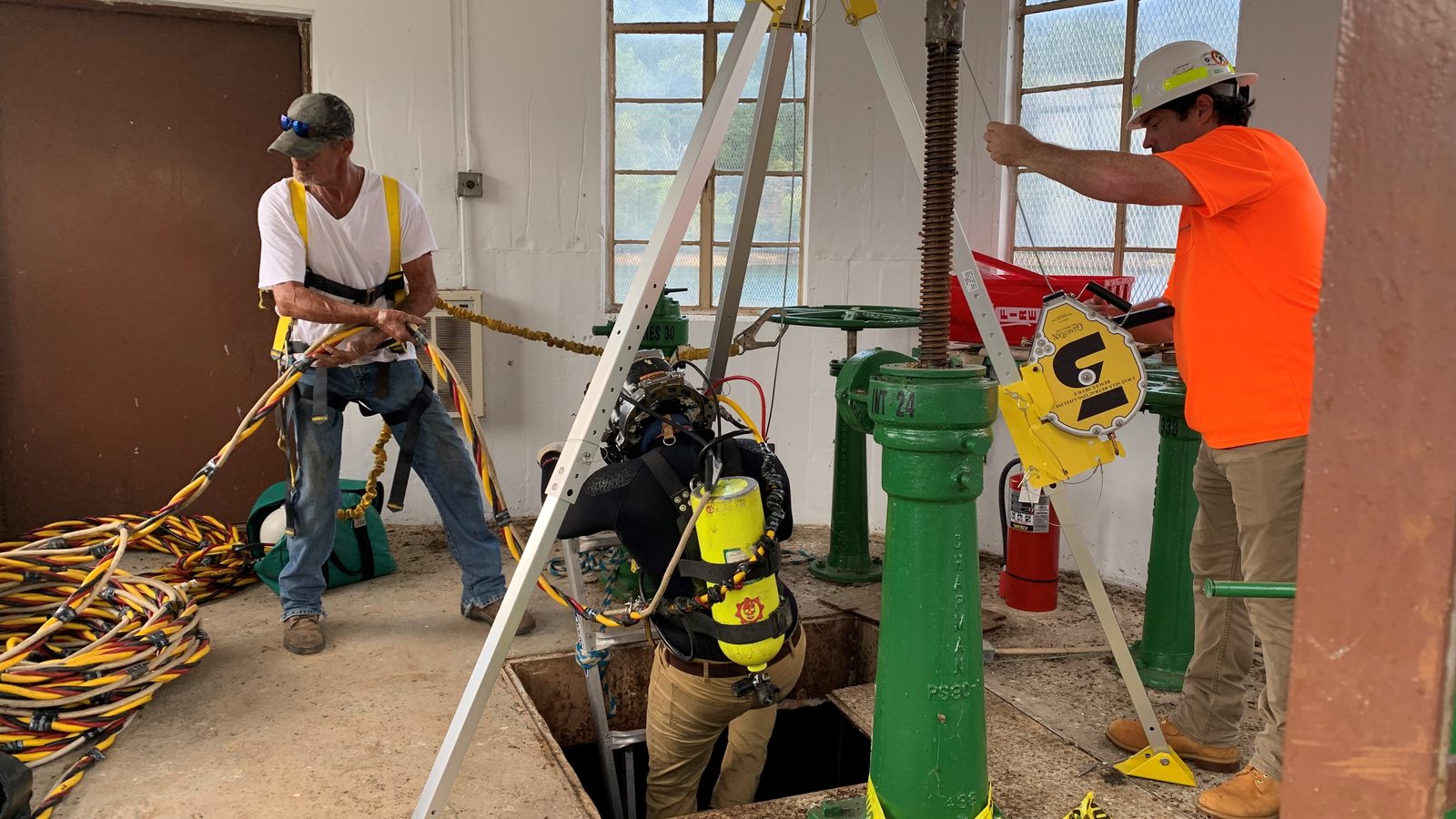
Some components cannot be reached by draining, by robot or by conventional contractor, siphons, conduits, deep wet wells, submerged chambers. Zion Marine plans and performs penetration work in exactly these environments, safely and documented.
When this capability is needed.
- Tanks and wet wells
- Sumps and pits
- Submerged chambers
- Restricted structures
- Conduits and culverts
- Siphons and inverted siphons
- Pipelines
- Long or restricted passages
- Difficult shoreline access
- Interior industrial facilities
- No crane or equipment access
- Remote or restricted sites
Services in confined environments.
Depending on the access and environment, services may include:
- Inspection
- Cleaning
- Repair
- Construction
- Documentation
- Debris removal
- Dredging
- Access and hazard assessment
- Ventilation and atmosphere evaluation
- Standby diver and extraction planning
- Lockout/tagout coordination
- Documented dive plan
- Full work documentation
From hazard assessment to a documented entry.
A structured path from the initial review to a deliverable the owner or engineer can act on.
Access & hazard assessment
The access path, clearance, ventilation, flow and hazards are assessed before any diver enters a confined or penetration environment.
Safety & standby planning
Standby divers, communications, emergency extraction and lockout/tagout are planned to the specific confined space.
Execution
Surface-supplied divers work the confined or penetration scope with continuous communication and standby support.
Documentation & handoff
Findings and work are documented so the owner has a record of the previously inaccessible condition.
Infrastructure and markets this capability serves.
Inverted siphons and crossings.
Dam outlets and passages.
Submerged and buried lines.
Deep wells and sumps.
Interior confined structures.
Submerged chambers and pits.
Transportation drainage.
Process structures and pits.
Not every space is a diving space.
Zion Marine does not imply entry into every confined space is possible. Each project is evaluated individually for clearance, ventilation, flow, hazards, access and emergency extraction before any method or crew is committed.
- Clearance and geometry
- Ventilation and atmosphere
- Flow and isolation
- Entry and extraction paths
- Hazard inventory
- Operational constraints
- Standby and rescue planning
Infrastructure work is performed with surface-supplied diving: umbilical gas, voice communication, topside supervision and a standby diver. Why that matters →
Licensed general and marine contractor. ADCI-certified divers and supervisors. TRIR 0.0 as of 2026, EMR 0.83 as of 2026. Full credentials on the Qualifications page.
Guides on this capability.
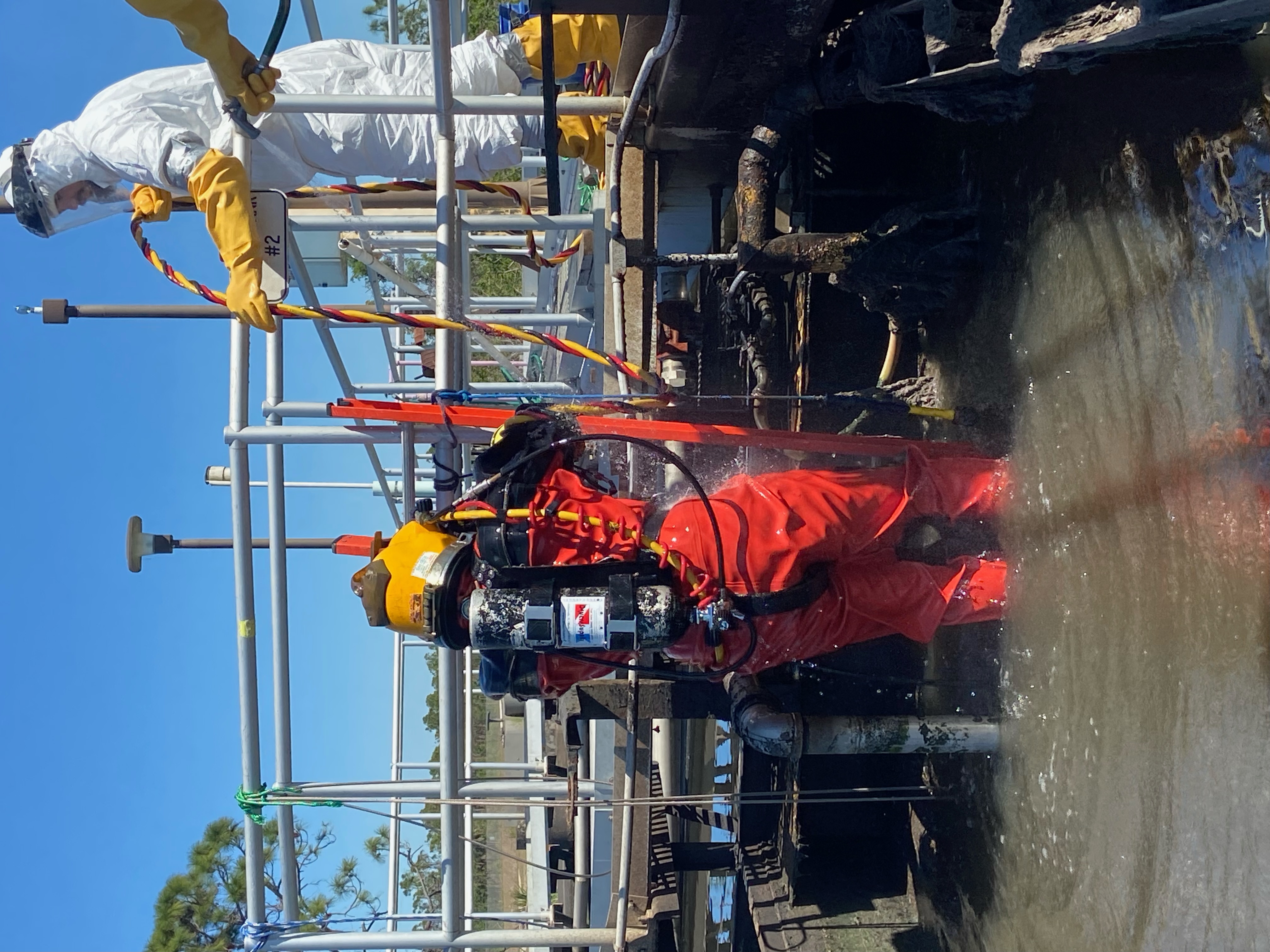
Contaminated-Water Diving: What's Actually Required
Equipment, planning and protocol differences for wastewater and process-water diving.
Read article →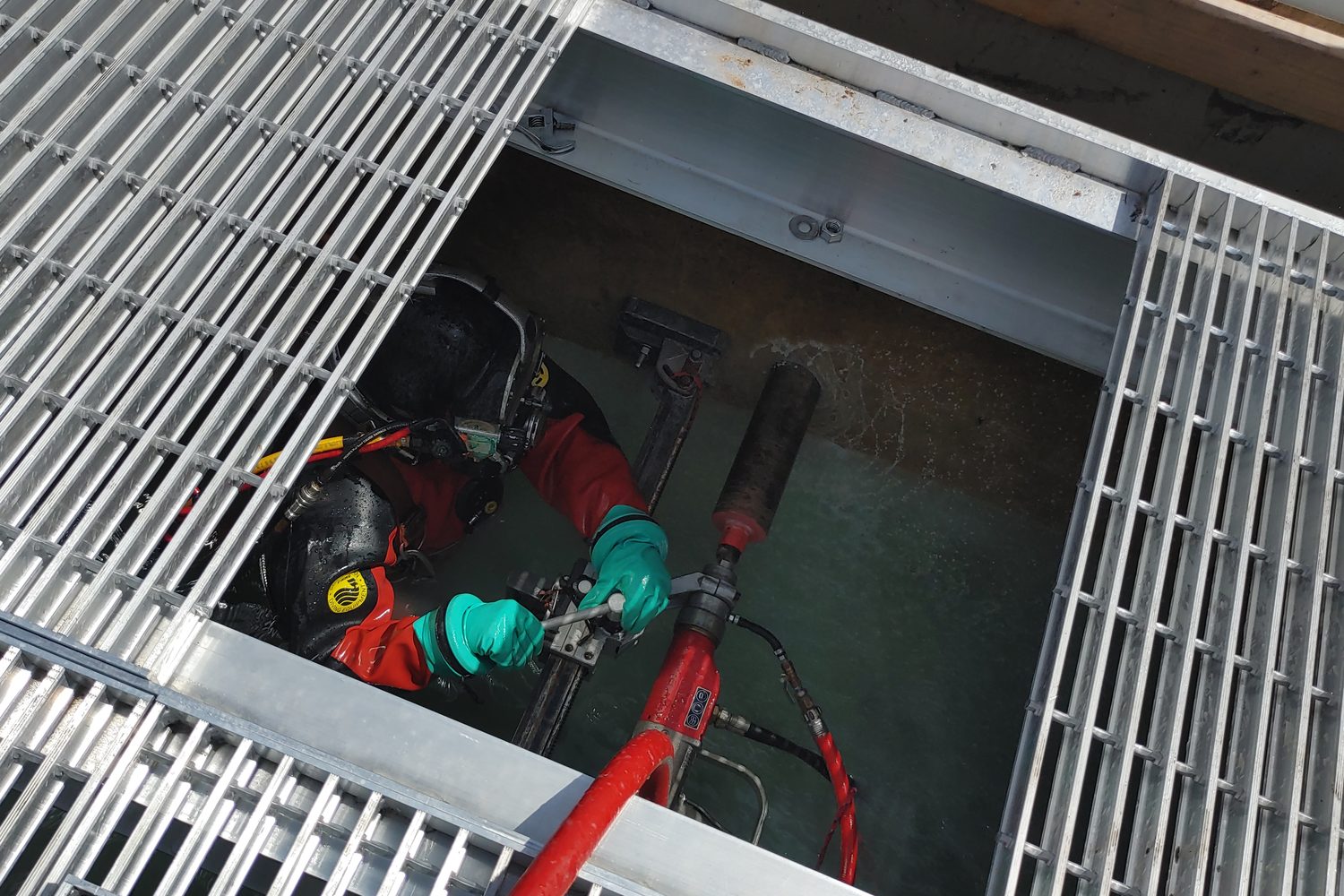
Diving Without Shutting Down a Facility
How inspection and repair can be planned around live, operating infrastructure.
Read article →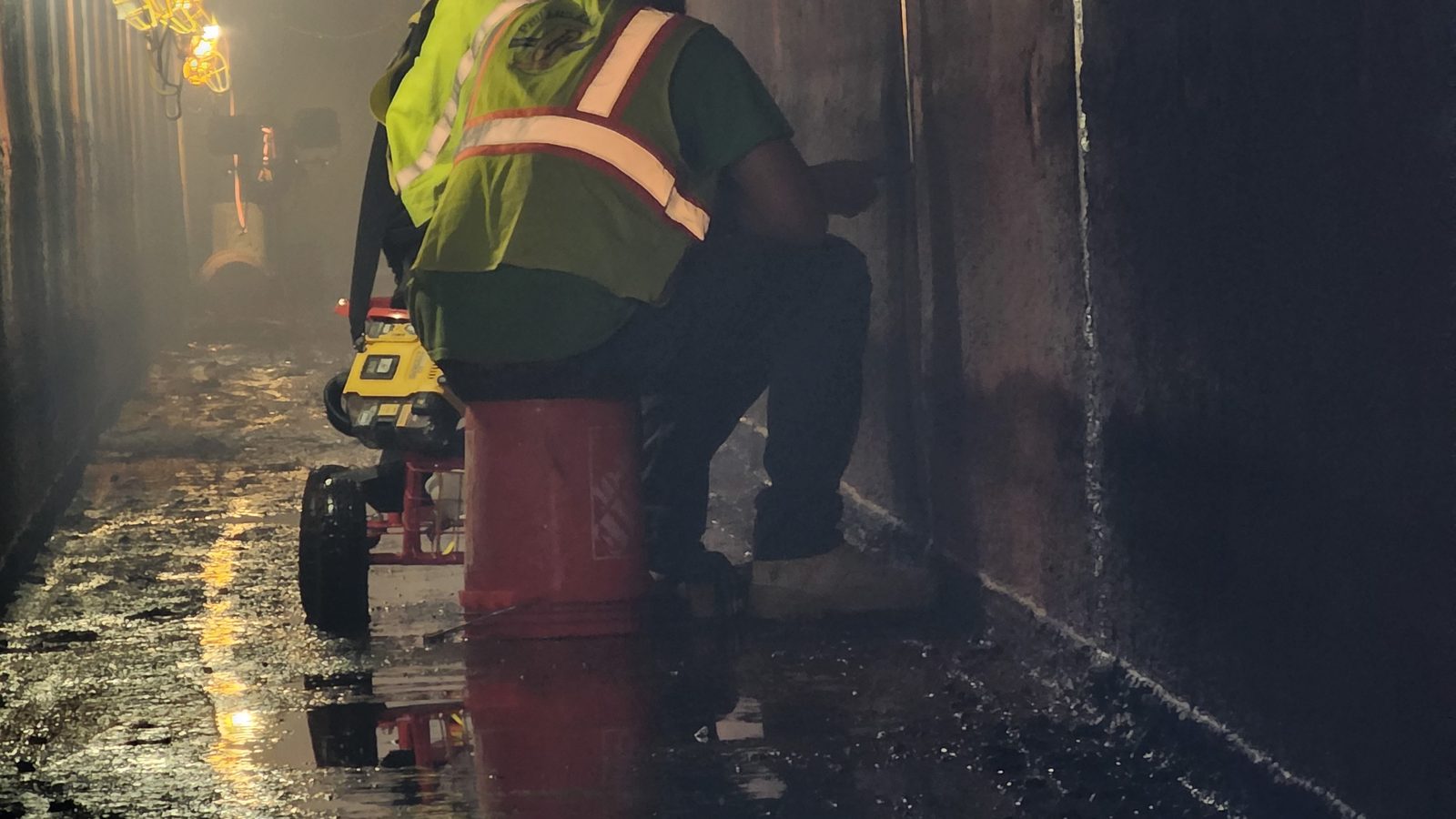
Planning an Underwater Infrastructure Inspection
What to gather before scoping a dive inspection at a treatment facility, dam or bridge.
Read article →Confined work starts with a condition.
When the condition inside a confined structure is unknown, Zion Marine begins with a documented inspection, then moves into cleaning, repair or dredging as the findings justify.
- Condition assessment
- Cleaning and debris removal
- Repair scopes
- Dredging where applicable
Have a component no one can reach?
Tell us about the access problem and the condition. We'll help determine whether confined or penetration diving is the right approach.