Diving Without Shutting Down a Facility
Reviewed by Joseph Templeton, President, Zion Marine · Last reviewed October 2026
How inspection and repair can be planned around live, operating infrastructure.
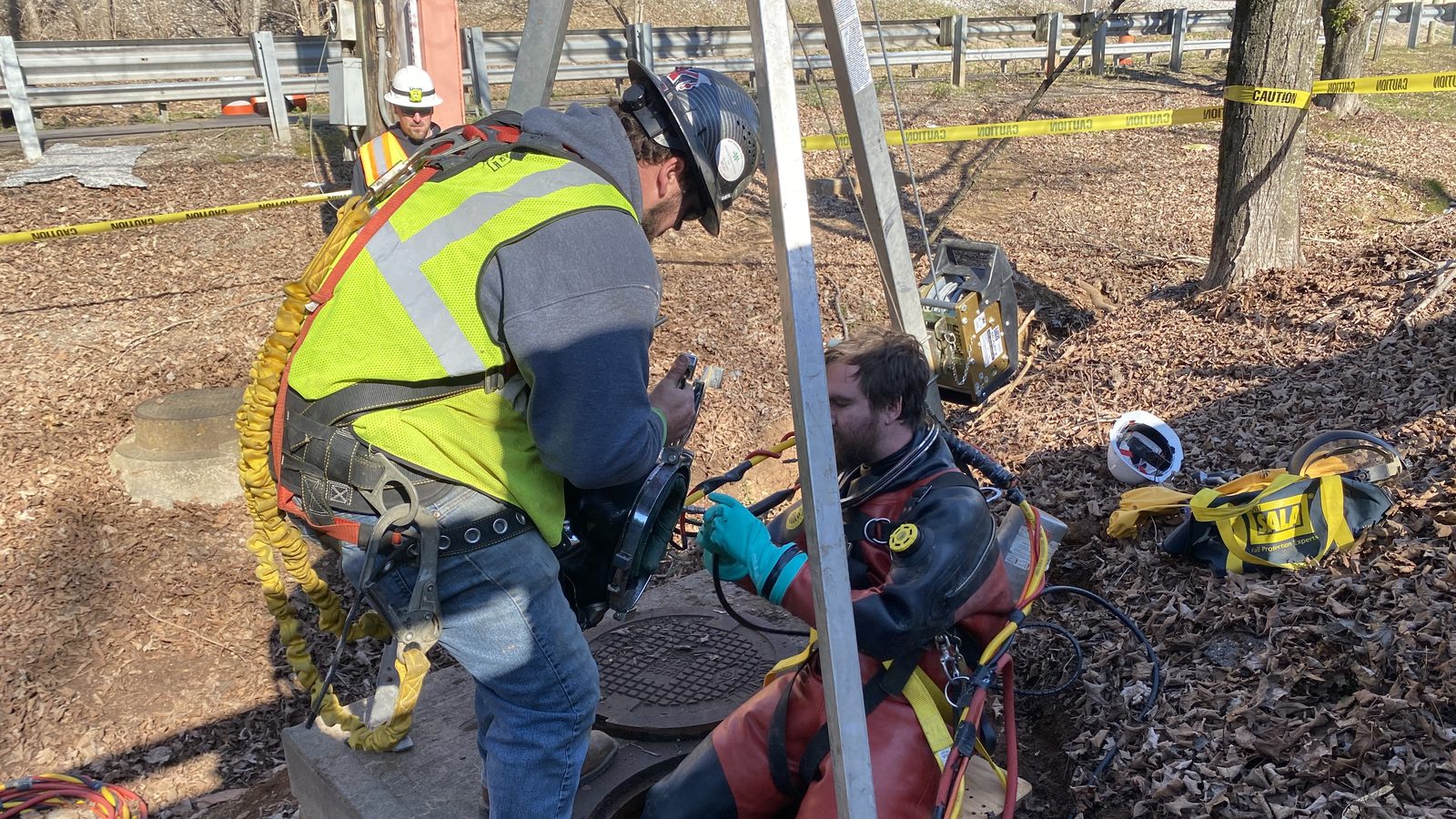
Why shutdown avoidance matters
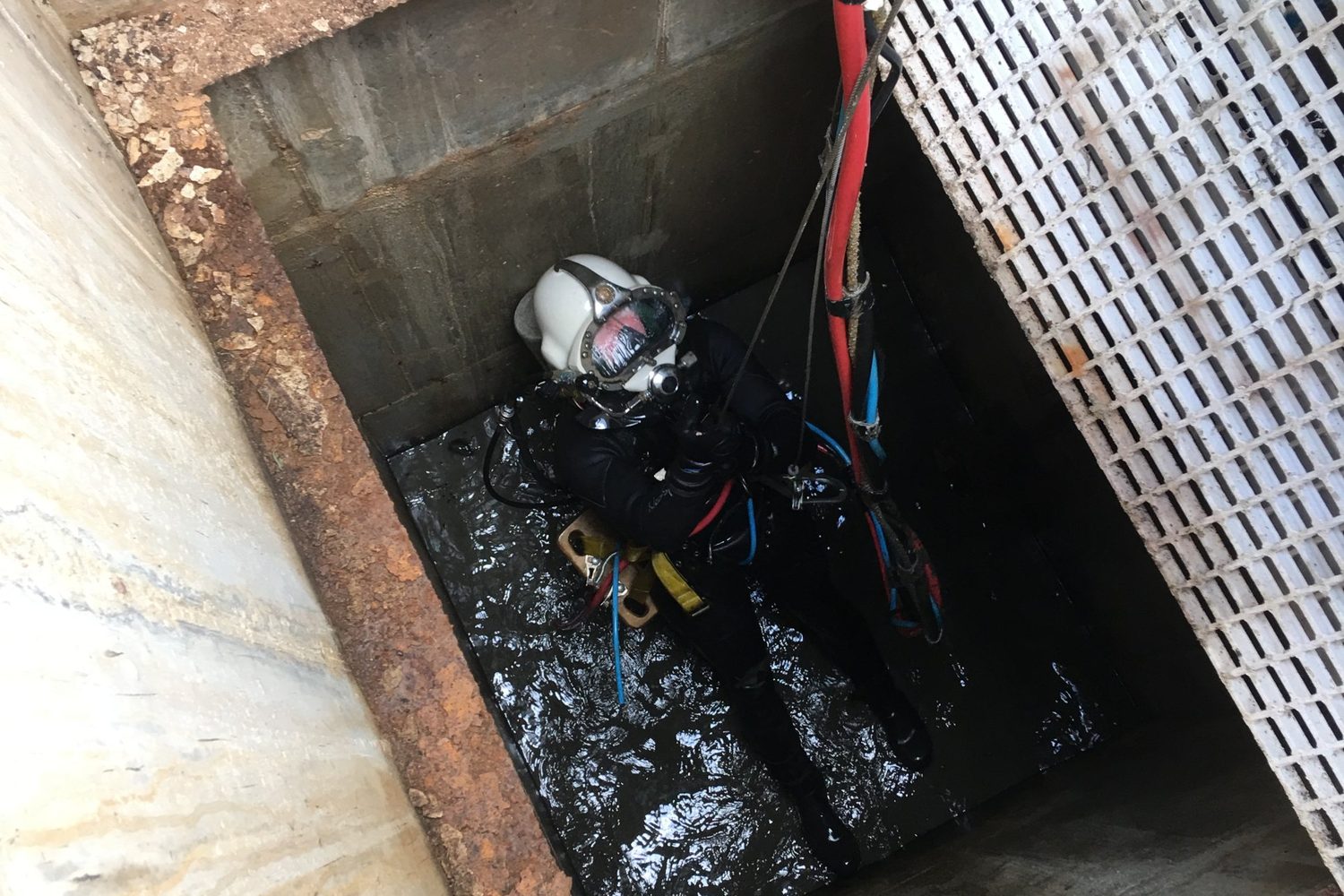
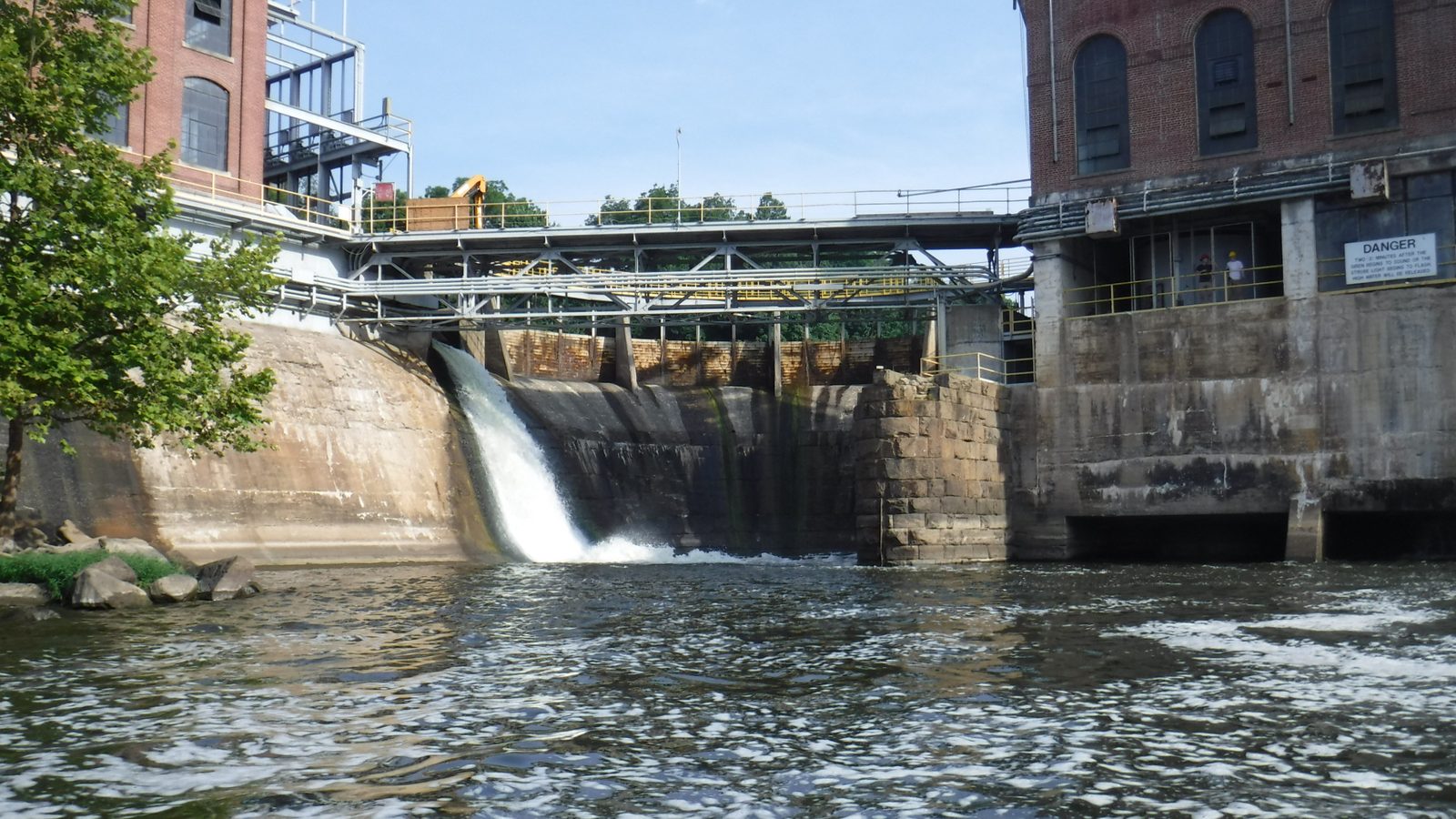
Draining a tank, isolating a basin or taking an intake out of service carries real costs, lost production, regulatory complications, and in some systems, service disruption. In many cases, underwater work can be planned so the facility stays in service while the condition is assessed or repaired.
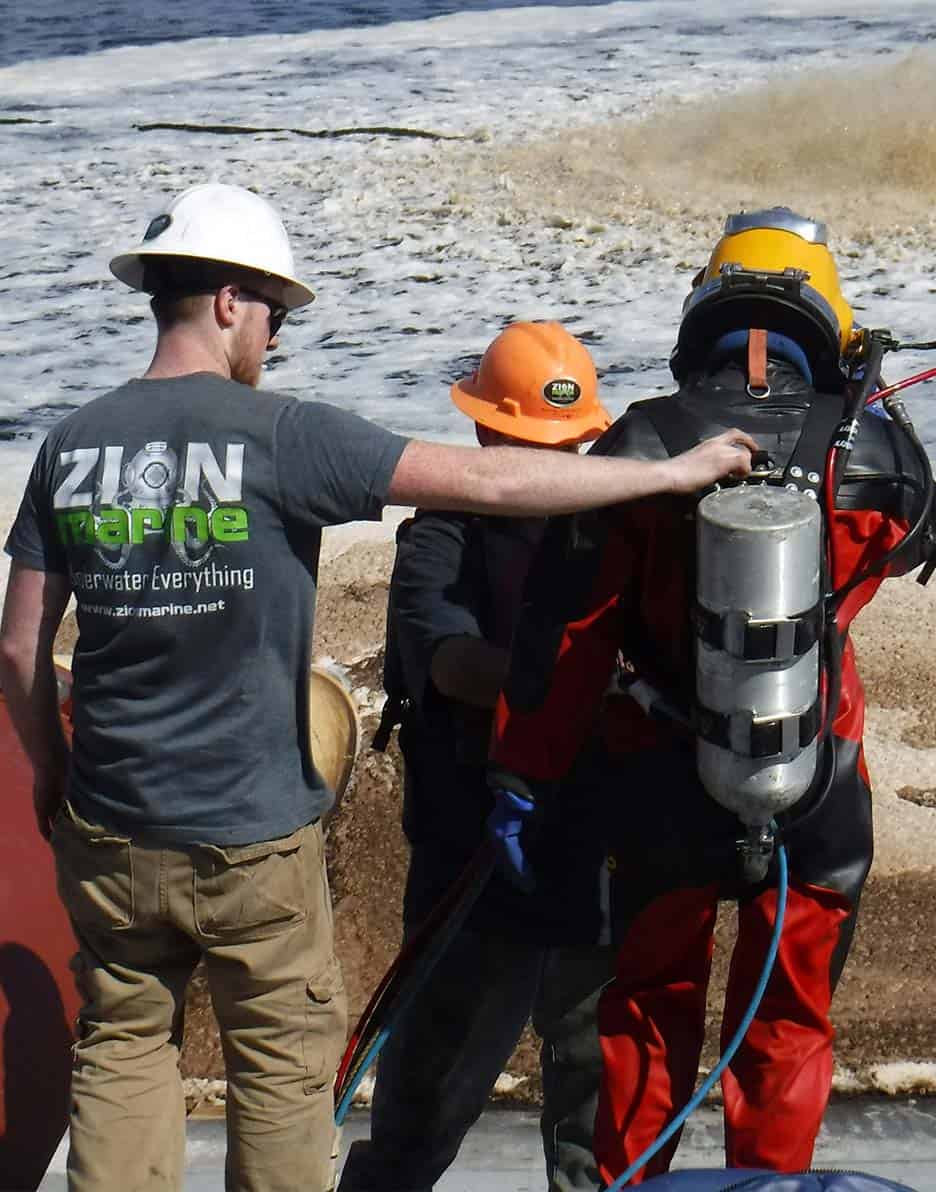
This is one of the primary reasons infrastructure owners use commercial diving at all: it trades a shutdown for a carefully planned dive operation.
What can often be done in service
Inspection and documentation are frequently performed with a facility operating normally. Video inspection, measurements, debris assessment and condition observations generally do not require isolation. Many maintenance tasks, debris removal, screen cleaning, minor repairs, can also be planned around operations.
- Condition inspection and video documentation
- Debris and sediment assessment
- Trash rack and screen cleaning
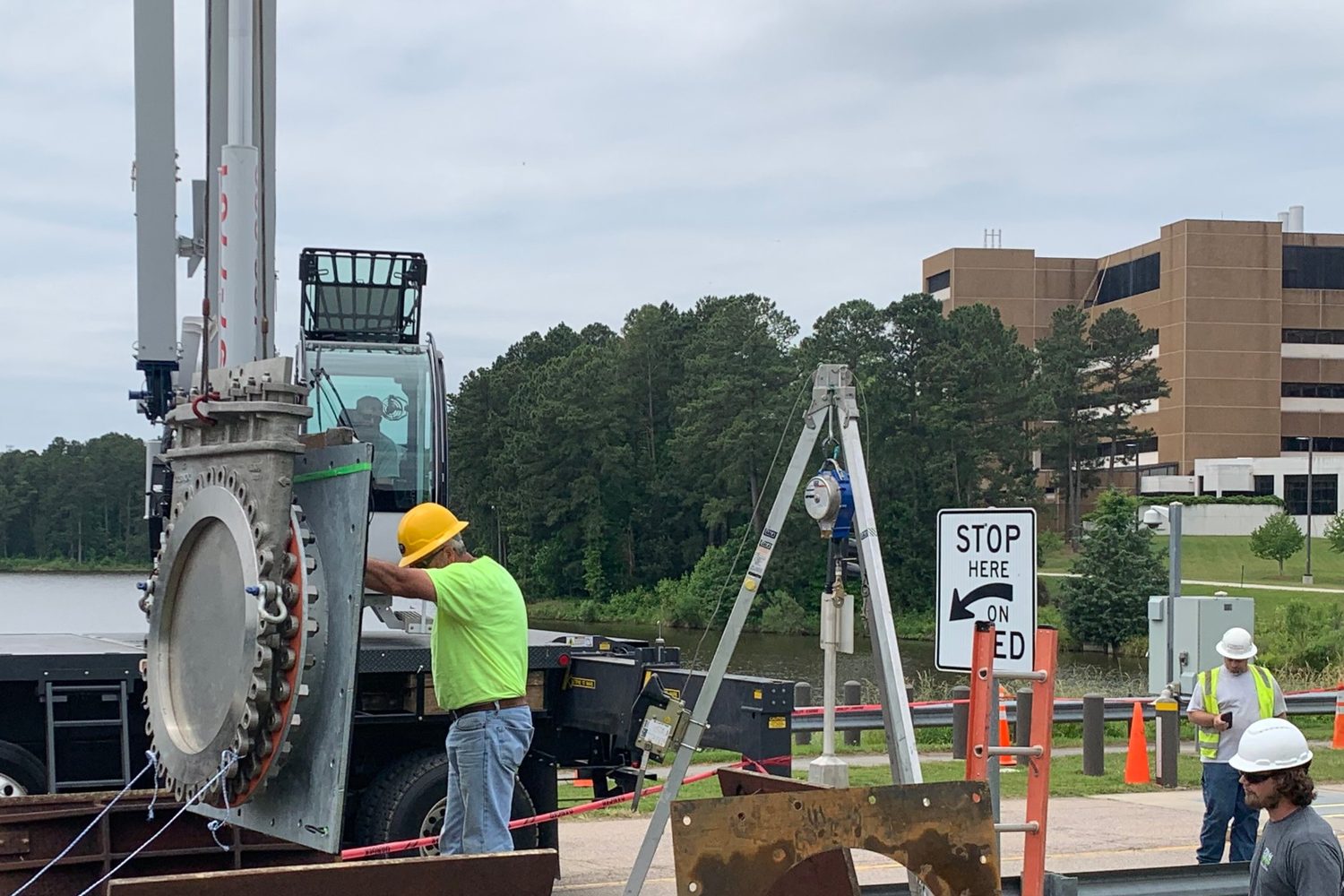
- Gate and valve condition assessment
- Minor underwater repairs and sealing work
- Diver-assisted dredging near intakes and basins
What must be evaluated case by case
No responsible contractor will promise that every task can be performed without a shutdown. Flow, depth, isolation options, access, contamination and the specific structure all affect what is safe and practical. Some repairs genuinely require isolation or a drawdown to be performed correctly.
The right framing is: many projects can be planned around facility operations, but each condition must be evaluated for flow, isolation, access, safety and operational constraints before the method is fixed.
How the planning conversation usually goes
An owner describes the structure and the condition. The contractor asks about isolation options, typical flows, access points and operating limits. Together they identify what can be done in service, what needs a brief window, and what genuinely requires full isolation.
That conversation is the deliverable of the scoping process, and it is why describing the facility and the condition early produces better outcomes than requesting a generic service.