Inspecting Gates, Intakes & Trash Racks
Reviewed by Joseph Templeton, President, Zion Marine · Last reviewed October 2026
Component-level inspection scope for flow control structures.
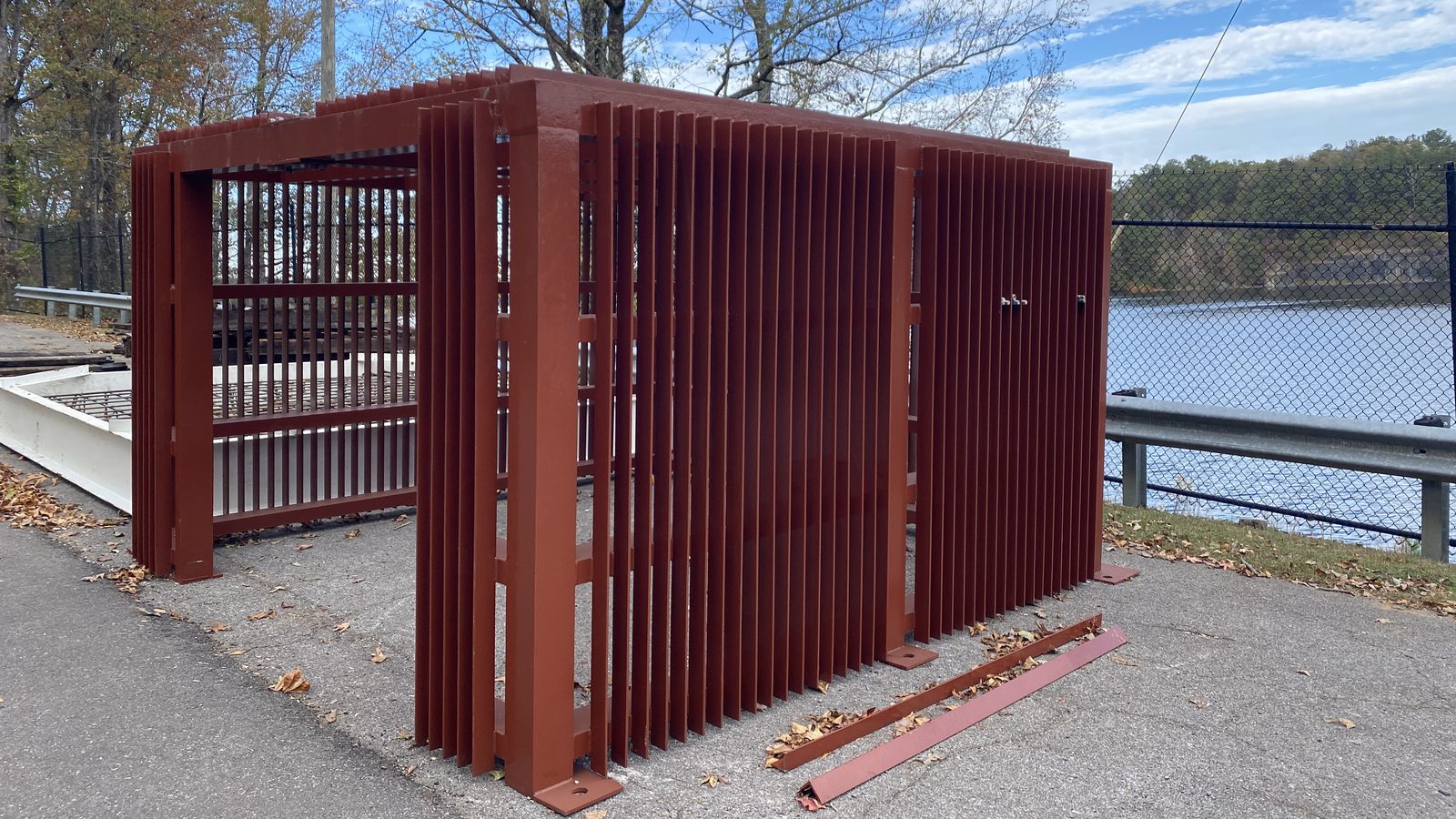
Gates: what to look at
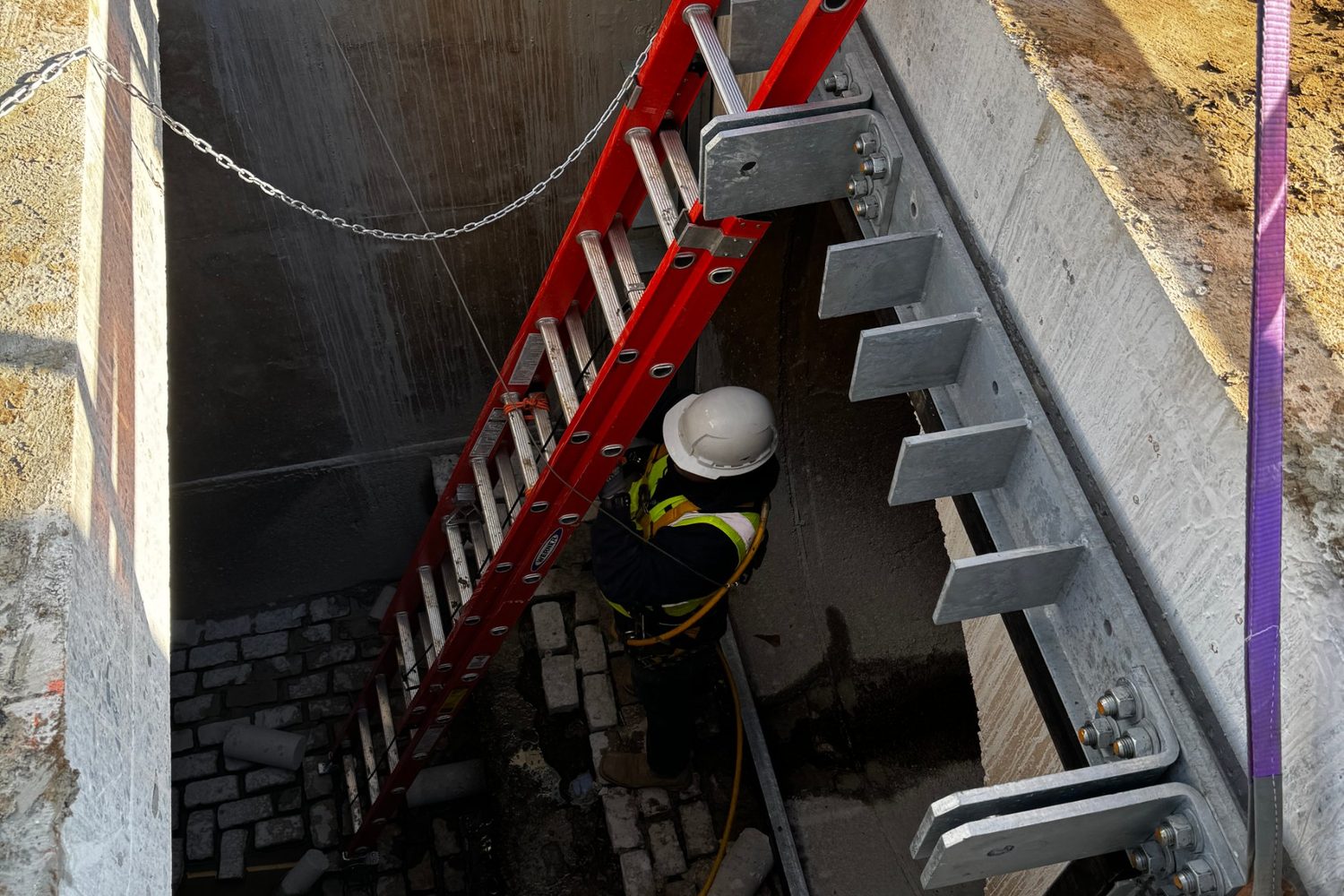
A submerged gate is a mechanical assembly, and inspection addresses each element: the gate leaf and its structural condition, seals and seal seats, guides and wheels, connection hardware, and the gate slot concrete. Corrosion, impact damage, seal degradation and guide misalignment are the recurring findings.
Trash racks: what fails
Trash racks fail through corrosion, debris impact, bar loss and structural overload. Inspection covers bar integrity, frame attachment, accumulated debris and the rack's overall alignment. A rack with missing bars is passing debris downstream toward components that are far more expensive to repair.
Intake structures
Intake inspection covers the approach area, the intake face, screens, gates and guides, and the connecting concrete. Sediment depth in the approach is documented because it predicts future flow restriction and identifies where maintenance dredging will be needed.
Differential pressure: know the hazard exists
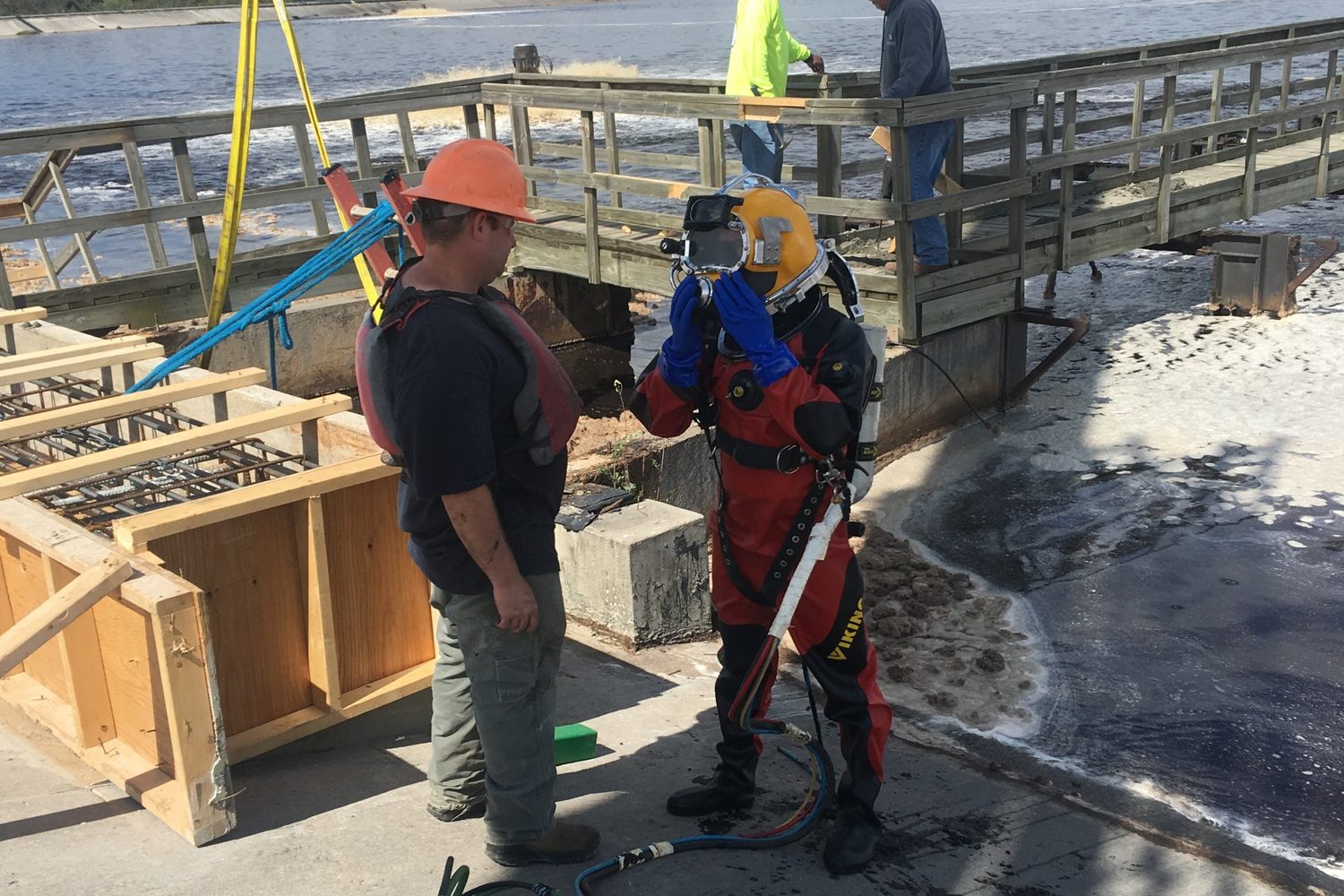
Flow control structures can create differential pressure conditions that are dangerous to divers and equipment. This is a real hazard class in gate and intake work, and it is exactly why this work belongs to commercial diving contractors with project-specific planning, not to generalist crews. Owners do not need the procedural detail; they need to know that the contractor takes it seriously and plans for it.
From inspection to repair
Gate and intake findings frequently lead directly to work: debris removal, seal repair or replacement, guide repair, concrete patching, or rack repair. Planning the inspection so repair options can follow in the same or a promptly scheduled mobilization reduces total project cost.