What Is Surface Supplied Commercial Diving?
Reviewed by Joseph Templeton, President, Zion Marine · Last reviewed October 2026
Why infrastructure work uses surface-supplied systems instead of scuba.
The difference in one paragraph
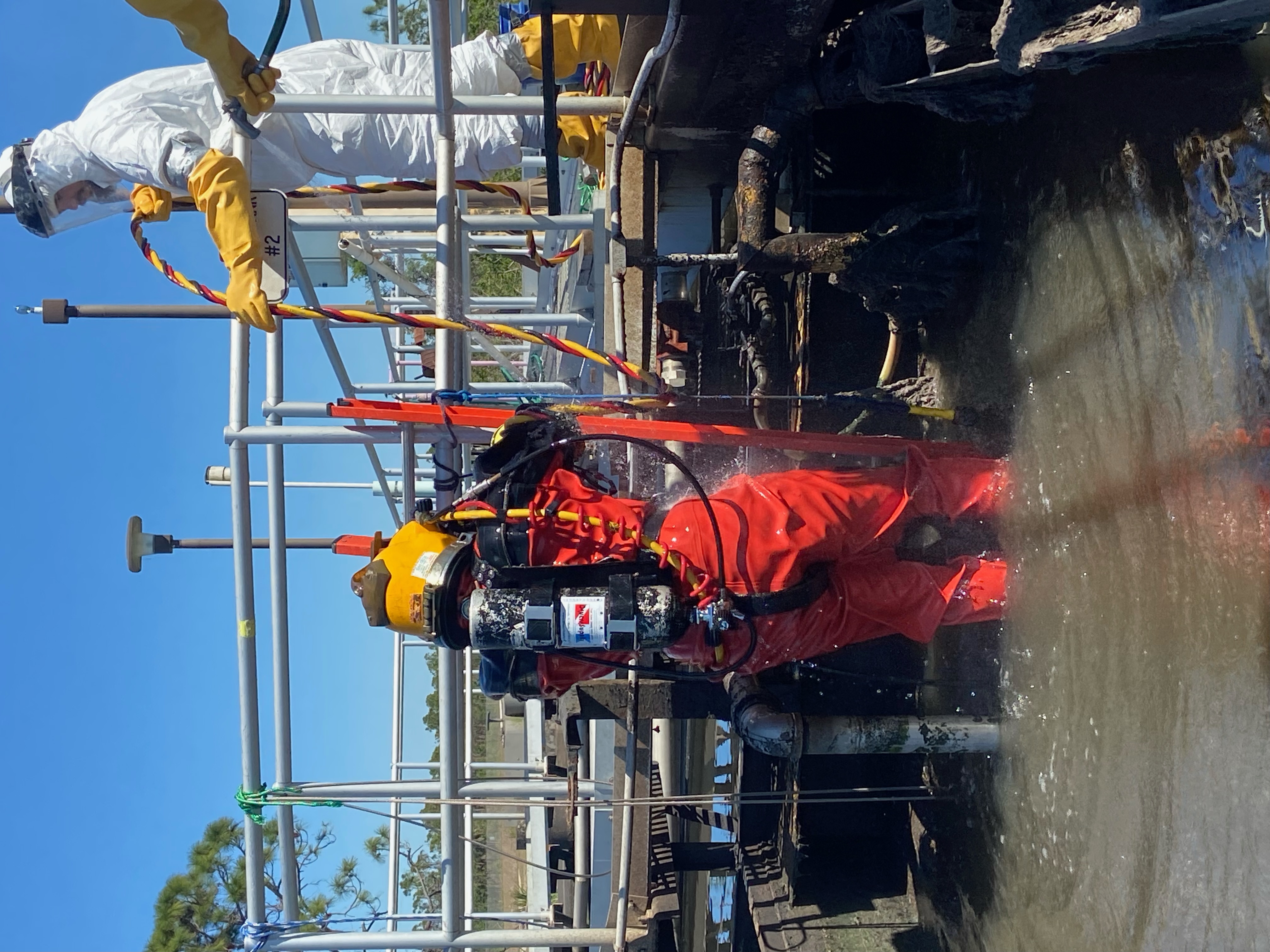
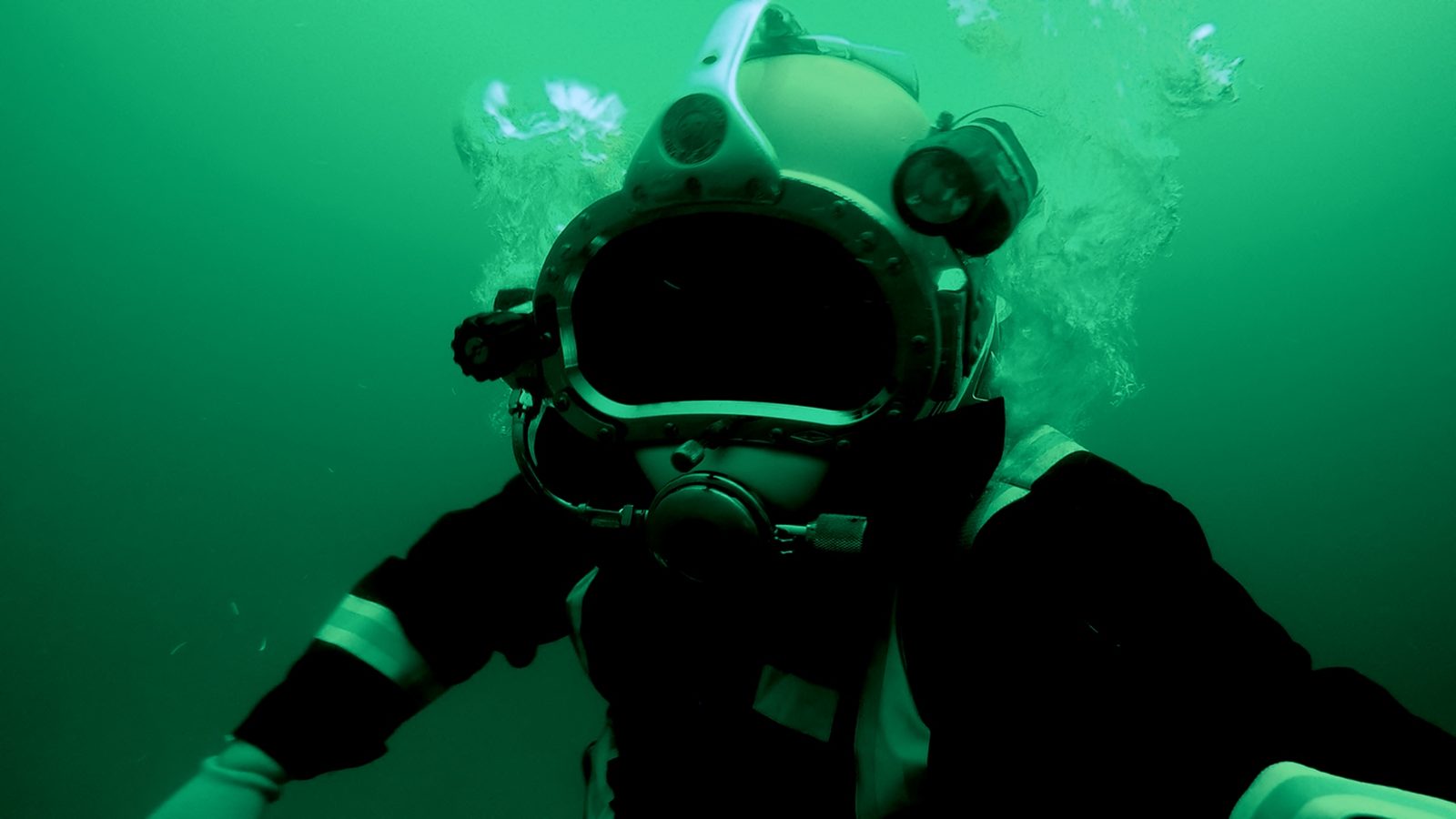
In surface supplied diving, the diver's breathing gas comes from the surface through an umbilical hose, and the diver is in continuous voice communication with the surface team for the entire dive. In recreational scuba, the diver carries a limited gas supply and has no physical connection to the surface. For work on critical infrastructure, that difference is the whole point.
Why it matters for infrastructure work
Surface-supplied systems provide several capabilities that matter when working inside a tank, a wet well or a dam outlet: continuous communication between diver and supervisor, effectively unlimited working time within dive plan limits, video fed to the surface in real time, and a standby diver suited and ready at the surface.
- Continuous voice communication throughout the dive
- Real-time video to the surface for inspection documentation
- Umbilical-supplied breathing gas independent of diver-carried reserves
- Standby diver prepared for immediate deployment
- Supervisor directing the operation from the surface
The dive station
The surface component, dive control point, gas panels, communication and video, and the standby diver's station, is where the operation is managed. Facility owners touring a dive station will recognize it as an industrial control point: procedures, logs, checklists and a supervisor with authority to stop work.
When other modes are used
Some projects use different diving modes or techniques depending on depth, duration and conditions. The selection is part of the dive plan and follows applicable regulations and standards. What does not change is the principle: the method is chosen to fit the work and the conditions, planned in advance, and supervised throughout.